by Gavin A. Todd
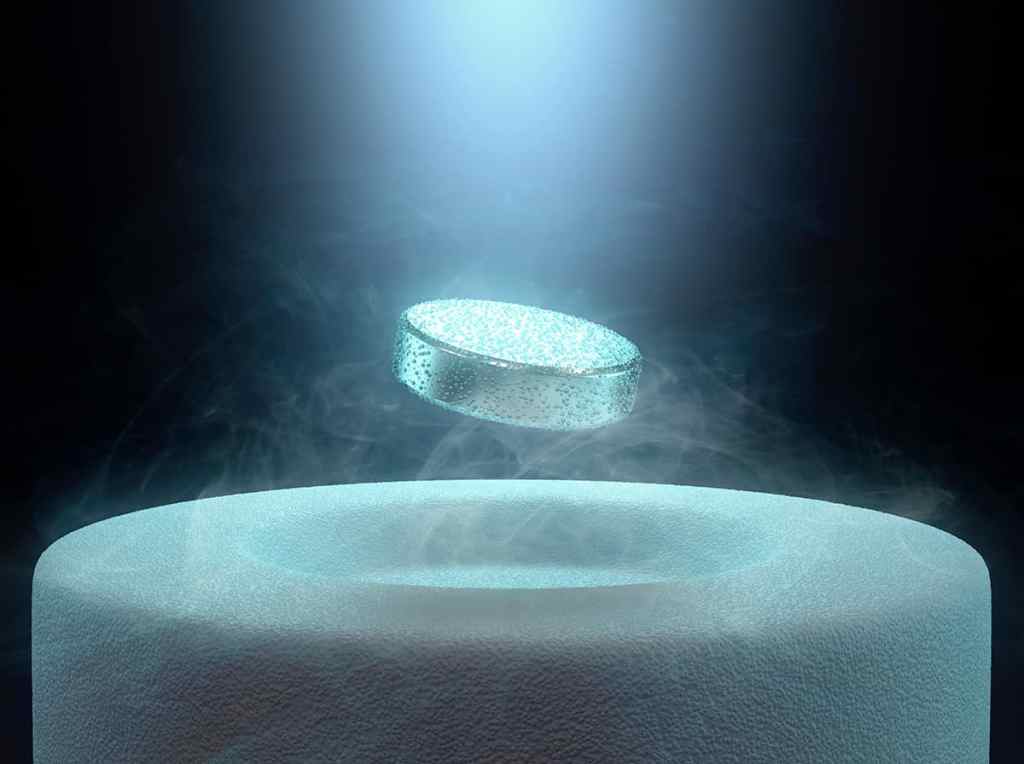
In late July, South Korean scientists reported a possible breakthrough with superconductors. If these reports are to be true, it would have major economical and technological impacts on the world. To the non-science literate people, I will first explain what exactly a superconductor is.
A superconductor is a material that has no resistance in electricity passing through it. It is also impenetrable to magnetic fields. A superconductor can only work at extremely low temperatures or extremely high temperatures. Nuclei are constantly vibrating; moving around. In a superconducting material, electrons are moving from atom to atom that correspond in a pattern of movement, synchronizing with the moving nuclei. The colder/hotter it gets, the more precise and organized these elections and nuclei work together.
With that being said, I will go on about the main point of the article. South Korean scientists had claimed to have reported a room temperature superconductor. A committee was established August 10th to investigate their claims. Researchers from the U.S, Europe, China, and Australia replicated the experiments the South Korean scientists have done and results were untasteful. Even at home scientists all over Twitter replicated experiments in their garage.
Turns out, the substance was determined to have properties that were more related to that of an insulator. A material that does not readily allow heat or sound to pass through it. And conduct electricity. Keyword: “Readily”, a pain isn’t it?
“With strong explanations for the resistivity drop and the half-levitation, many in the community were convinced that LK-99 was not a room temperature superconductor. But mysteries lingered – namely, what were the material’s actual properties?”
Said by Dan Garisto, from Nature Journal on August 18th. Even experts like Garisto were skeptical about it, and they were right.
 beniciapaw.com