By Staff
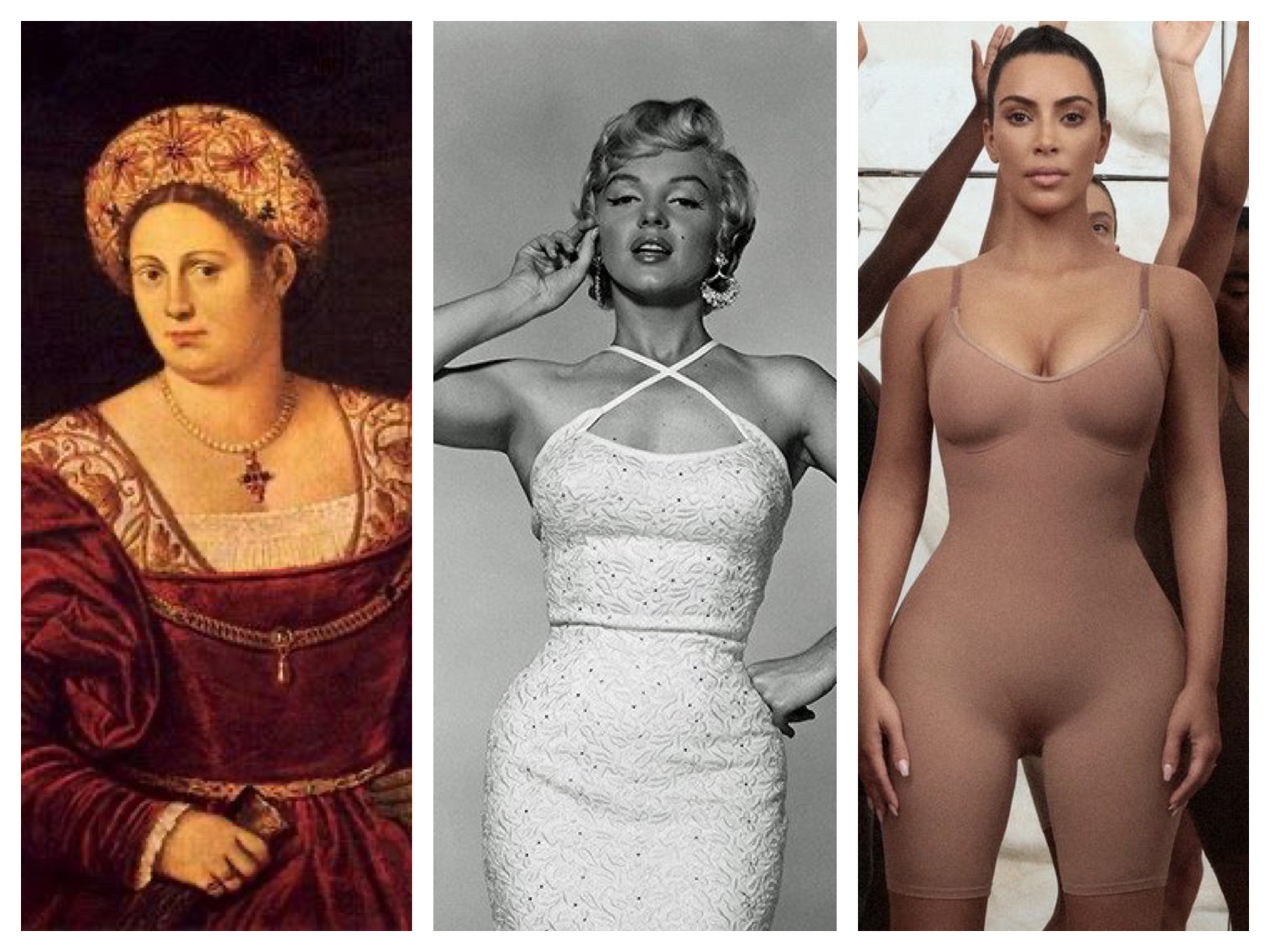
The evolution of female beauty standards have changed drastically throughout decades showing that beauty is subjective. Although they’re constantly changing, most beauty standards end up leaving women with unrealistic expectations of being “beautiful”.
Though every body type is beautiful, the world is always changing its perception of “best”. In Ancient Greece (400 BC), men were held to a much higher standard than women, while women were thought to be disfigured because they looked different than men. The ideal woman was plump and curvy as it was a sign of wealth because she most likely had access to more food.
Today’s beauty standards have been set mostly by the media. A slim figure, blonde hair, blue eyed model, on the cover of many magazines. However, it wasn’t until the 1990s that stick thin was seen as desirable. Many models of the time like Kate Moss only caused fans to glorify ultra thin and unhealthy figures, calling it “heroin chic”.
The hourglass figure was sought after by women in the 1950s, as they were encouraged to be as curvy as possible. Advertisements even urged women to gain weight to fill out their curves. Ten years later, the 60s encouraged women to lose their curves and have a straight figure, with small shoulders, and long legs. This body expectation continued into the 70s.
By the 80s, women were expected to be tall, slender, and strong. Due to advances in fitness, women meeting societal expectations had a more muscular look, and an athletically toned body.
Plastic surgery has also skewed how people see beauty. It has caused natural beauty to seem flawed for the average person after seeing popular celebrities with botox, face lifts, and redoing entire portions of their bodies.
Women continue to change their looks and strive to meet what society says is beautiful, in the attempt to be enticing to others. There are many standards around the world that can be seen as positive but also many that are unrealistic.
 beniciapaw.com