By Lydia Browne
Easter is a holiday that has significance for many people, whether it is for religious reasons or simply as a day of celebration.
For those who celebrate the religious background of the holiday, Easter is a day to honor the resurrection of Jesus Christ. According to the Bible, Jesus was crucified by the Romans in around the year 30 A.D. Three days after his death and burial, he rose from the dead. The events of this third day are the subject of the holiday.
For some denominations of Christianity, Easter is the end of Lent—a period of fasting, prayer, and giving money to the poor over 40 days. The last week before Easter—called the Holy Week—commemorates events such as Jesus’ entrance into Jerusalem on Palm Sunday, the Last Supper with the twelve disciples on Maundy Thursday, and the crucifixion on Good Friday.
In 2024, Easter falls on March 31. However, the date of the holiday is different each year. It also varies depending on which calendar you follow. In the Gregorian calendar, which is followed by western Christianity and the majority of the world, Easter falls between March 22 and April 25. It is usually on the Sunday after the first full moon of the spring equinox. In the Julian calendar, which is followed by Eastern Orthodox Christianity, Easter falls between April 4 and May 8.
Despite its roots in the Christian religion, many of the aspects of Easter stem from pagan traditions. The first of these is the name, which comes from the name Eostre, the Anglo-Saxon goddess of spring and fertility.
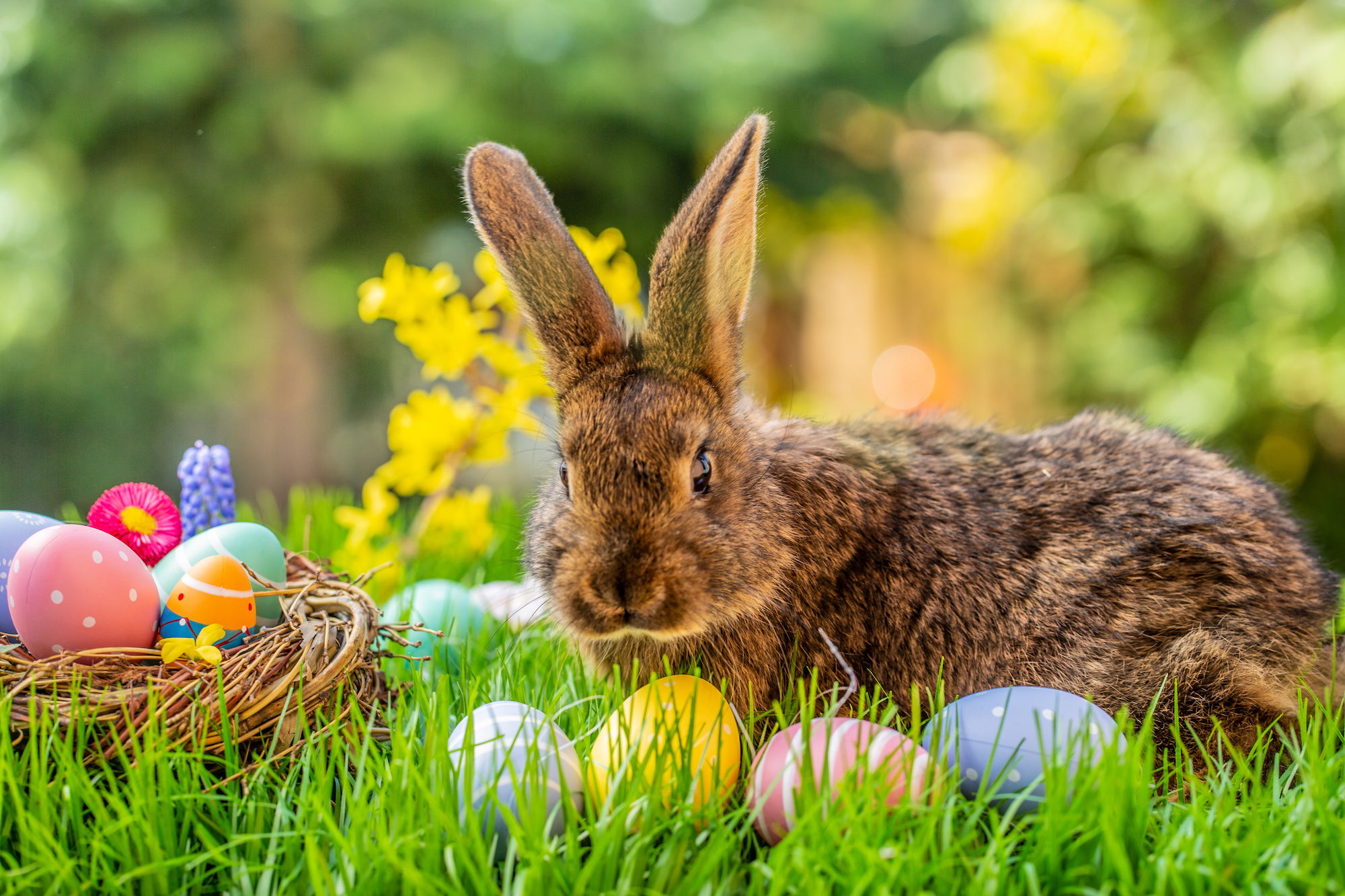
Easter eggs—which represented birth and fertility in pagan traditions—are a symbol of the holiday. The incorporation of eggs in the Easter tradition also signifies the religious celebration of new life. Many participate in Easter egg dyeing, a tradition which originated in the Middle East when eggs were dyed with onion skins. Easter egg hunts are also a common activity to celebrate the holiday each year.
The tradition of the Easter Bunny—another symbol of the holiday—is believed to have been brought to the U.S. by German immigrants in the 18th century. Rabbits are also a symbol of fertility.
For those in the northern hemisphere, the springtime setting of Easter continues the theme of association with new life as the new flowers bloom and baby animals greet the world.
Even the food that is traditionally enjoyed on Easter is steeped with symbolism. Lamb—a common dinner for Easter celebrations—was an animal often sacrificed in Jewish traditions, and is also often served at Passover. Lamb connects to the phrase “lamb of God,” which is often used in reference to Jesus Christ and his sacrificial death on the cross.
In spite of its identity as a religious celebration, Easter has also become a commercial holiday of cards and chocolates. Due to this, along with the pagan roots of some of the holiday’s traditions, some denominations of Protestantism—such as Quakers and Lutherans—choose to ignore and remove certain Easter customs from their celebrations.
Much like Christmas, the celebration of Easter in the U.S. has come to be a mixture of religious and secular traditions. No matter how you like to mark the occasion, there are plenty of ways to celebrate during Easter.
 beniciapaw.com