By Beau Cline
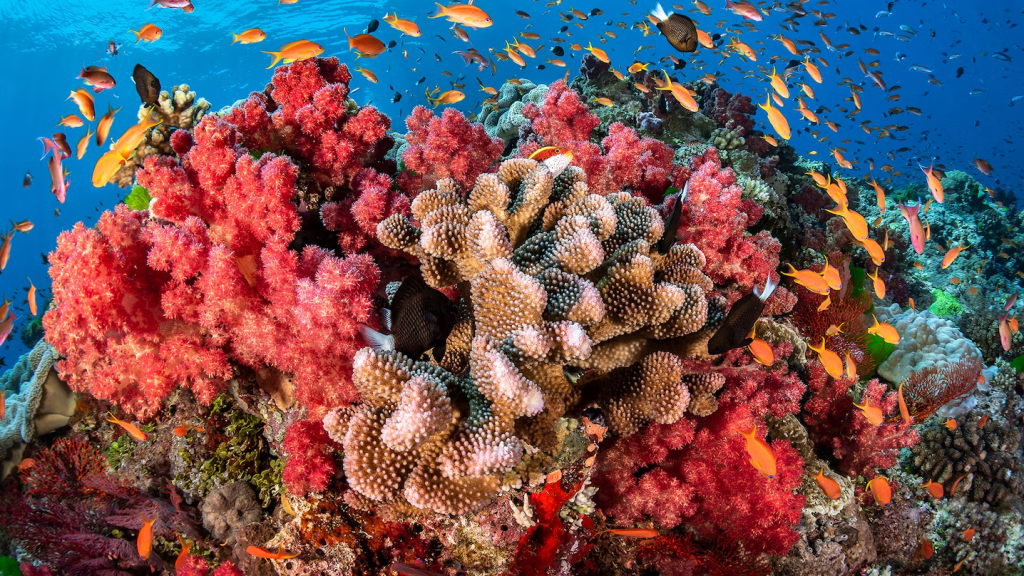
The Great barrier reef is home to over 600 species of coral spanning over 133,000 sq miles off the coast of Queensland Australia. It is a source of great beauty with hundreds of different colorful corals and is a very important environmental space for fishes and other ocean inhabitants. However the reef is in dire shape at the moment, with world pollution destroying over half of the reef’s coral coverage in the last three decades. We are trying to figure out what the main cause is and how we can stop it.
One of the main issues we’ve found is the bleaching of large coral reef sections. Bleaching is a natural function of coral when they are under large stress, they expel microscopic algae that lives in their tissues. The transparent white skeleton is what’s left over after the bleaching process. These bleached corals aren’t actually dead, but they’re under a much greater risk of starvation and disease.
We first recognized this bleaching in 1998 when there was one of the hottest recorded summers for the reef. The bleaching was mild for most reefs, with a mere 5% mortality rate, however the Palm Islands were affected massively, having around a 70% mortality rate. The next 15 years were mostly alright with a few bleaching events taking place here and there, all very minor events, up until 2016.
In 2016 the northern side of the reef between Cape York, and Port Douglas experienced a widespread and severe bleaching event due to record high ocean temperatures. With widespread bleaching the coral had a mortality rate of 22% the highest we had seen yet.
2017 wasn’t any better for the reefs unfortunately. In an unprecedented back to back bleaching, the reefs had taken another attack as 2/3 ‘s of the reef was severely affected this time in the central third of the reef. These back to back bleaching events began to raise awareness about the reality of pollution in our oceans.
In 2024 we are experiencing our 5th bleaching event within the last 8 years once again driven by global heating of our oceans. The Southern section which is over 100 years old is experiencing the worst of the bleaching this year. Dianae Kleine a project manager of coral watchat at the University of Queensland had this to say about the southern reefs “It’s devastating. Unbelievable. The water was way too warm. Heron has escaped bleaching several times but this year it has hit so hard,”.
 beniciapaw.com