By Parker Soughers
In modern politics, a president’s first 100 days in office are crucial to defining the rest of their term. It is in this window of time that they set the tone for the following years. How a president is perceived in the first 100 days will determine how successful they will be in working with Congress and other branches of government for the rest of their presidency. Public approval is critical in this time period. Should a president lose the approval of the general public, passing policy and executive actions becomes incredibly more difficult.
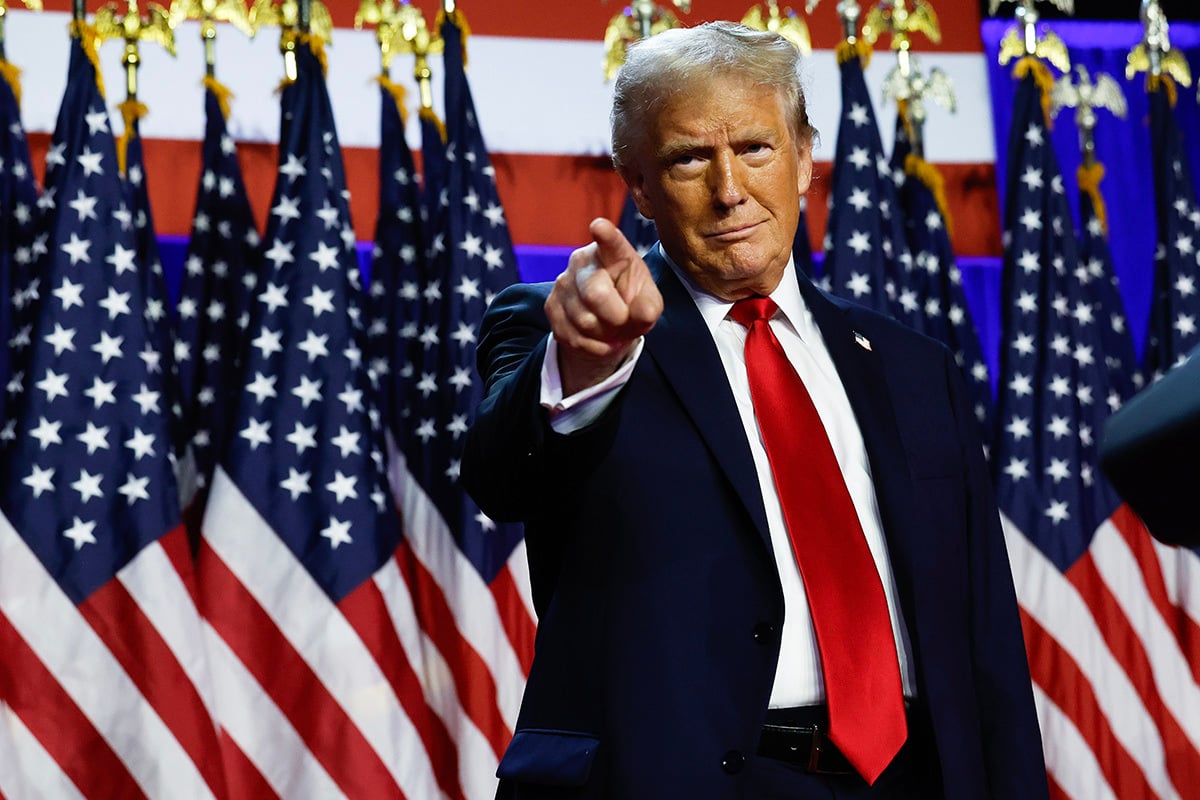
President Donald J. Trump, 47th President of the United States of America recently completed his first 100 days of office on April 29th, 2025. His actions over this stage of his presidency have created major waves throughout the country. With a unified government of Republicans backing his actions, Trump’s presidency has issued a historic number of executive actions.
Over the last three months, Trump has fulfilled his promise to supporters by dramatically reshaping the American government. He has issued 130 executive orders‒the most any president has issued in their first 100 days. The orders pertain to regulating national museums, gutting federal funding for civil services, and radically changing immigration policy. These examples are only a fraction of the outreach that these orders have covered.
While these executive orders have overwhelmed the public, Trump’s vocality about annexing Canada, seizing Greenland by force, and controlling the Panama Canal have created major disapproval among public opinions. With both Canada and Denmark appalled by the threats of Trump, disapproval of the Trump Administration is present on a global scale.
As a part of his plan to revamp the American economy the Trump Administration issued large tariffs on trade with Canada, Mexico, and, namely, China. These tariffs reached almost as high as 145% on goods for China. The tariffs have sparked a global trade war that has caused American markets to plumet severely. Economic policy was a cornerstone of Trump’s campaign strategy, but now he is leaving many supportive voters disgruntled at the state of the nation.
His administration has cut funding to universities that do not implement his policies and that allow protests that rival his political agenda. Hundreds of thousands of federal jobs have been removed. Members from the Departments of Energy, Homeland Security, and Education saw mass firings. Every defendant from the Jan 6th insurrection were issued pardons and commutations by the president. Every action the Trump administration has taken has been that of the president’s choice, seceding nothing to the bureaucracy of America.
With the end of Trump’s first 100 days at its end, a few issues for the Trump administration presented themselves. Public approval of his administration dipped below 39%, the lowest public approval of a president since public opinion polling started. The rumblings of a democratic resistance to Trump’s policies have become apparent. Universities, like Harvard and Tufts have begun to stand against the threat of cut-funding, consumer confidence has dropped exponentially as inflation continues to rise.
Moving forward, the Trump Administration remains optimistic for its future. However, how will that future be affected by the stirring of a public uprising? Trump has effectively “stacked the deck” in his favor by punishing adversaries and weakening the media. Trump’s first 100 days have set a precedent that continues to scare Americans.
What will be accomplished by the end of the presidency? Trump’s first 3 months in office have outlined the direction the country is headed: a decline in economic safety, increased inflation, the destruction of the Department of Education, the erosion of the justice system, and the continued consolidation of power in the Chief Executive.
 beniciapaw.com