By Sean Mueck
At only 46 square miles, San Francisco is tiny. Los Angeles is 10 times larger than the city. Despite San Francisco’s small size, the neighborhoods which make it up are endlessly unique and different in design, feel, and culture from one another. Each neighborhood feels like a separate world figuratively and sometimes very literally from the next.
Even with the close nature of everything in the city, most tourists and even Bay Area residents only visit a tiny portion of touristy northern neighborhoods and downtown. Outside these areas stands an entire world where the residents of San Francisco live, eat, play, and work. This is a complete guide to the beautiful neighborhoods that make up the 415.
Downtown –
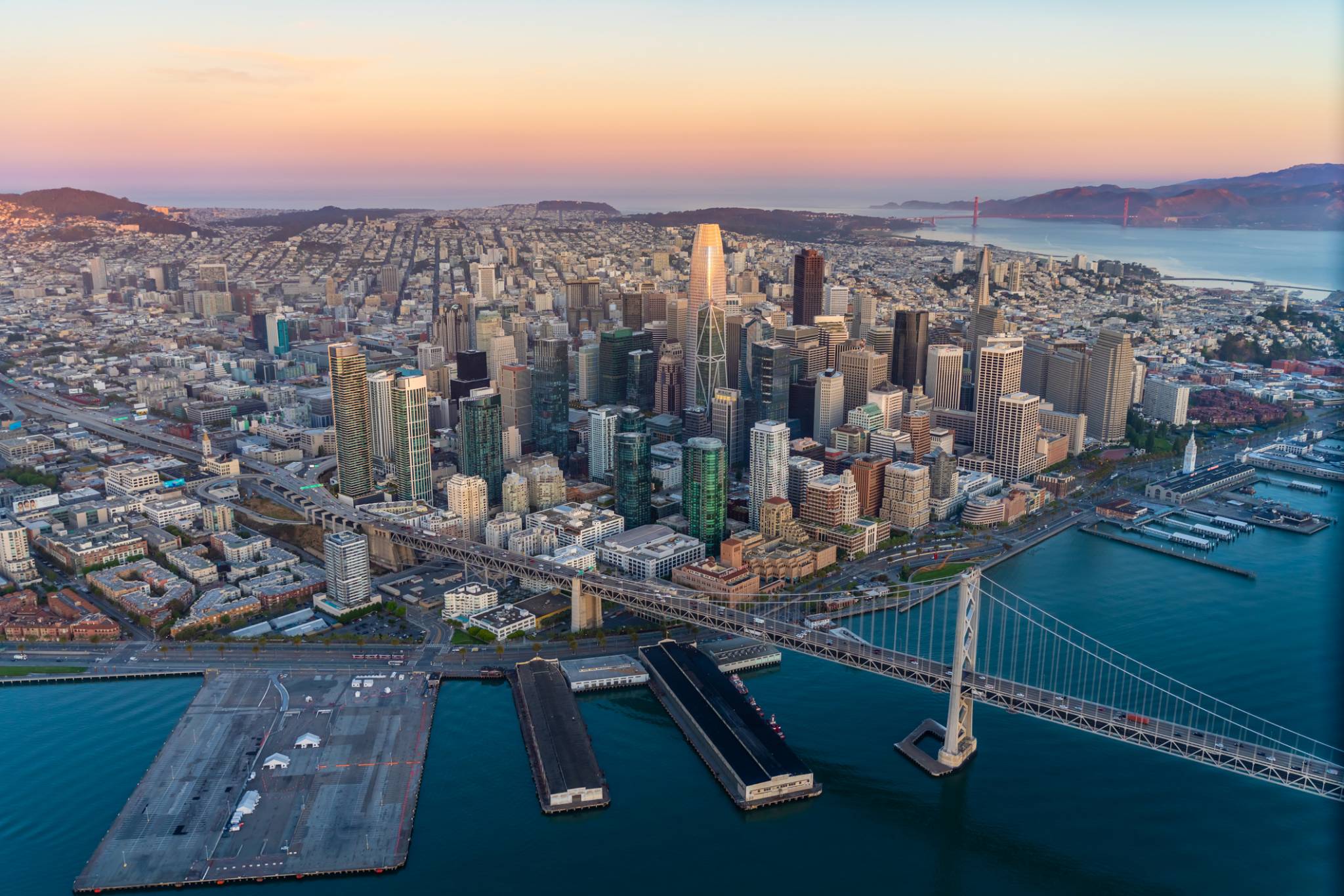
Located on the eastern bank next to the Bay Bridge, downtown is the economic center of the city. When referring to downtown, I’m talking about a couple of different areas, which all comprise the core of the city. Sat right on the Embarcadero next to the Ferry Building is the Financial District. The Financial District is the economic hub of the city, home to big tech, finance, and Fortune 500 companies. This is where a large portion of the Bay comes to work every day. Taking Market Street west, we next arrive at Powell Street. This is home to the San Francisco shopping mall and the turnaround for the Powell/Hyde and Powell/Mason cable car lines. Just north of this is Union Square, which is home to all sorts of high-end retail and restaurants. Even further north and you’ll reach Chinatown. Traveling further west, we reach the Mid-Market and Civic Center, the administrative hub of the city. Home to City Hall, the main branch of the San Francisco Public Library, and UN Plaza, Civic Center is the brain that runs San Francisco. To the immediate north of Civic Center is the Tenderloin. Infamous for the fentanyl epidemic, the Tenderloin has been the main talking point for the media when addressing the city. Despite this, the Tenderloin has a long history of housing working immigrants and is home to a sizable Vietnamese population with some of the best and cheapest food in the city. When staying downtown, you’ll have no shortage of public transit. Many of the city’s bus lines run through here. Running down Market Street is the F Market trolly, which runs historic cars. Underground Market is the Market Street subway, a double-decker subway tunnel. The first deck is for Muni Metro lines J, K, L, M, and N. On the lower deck is BART, which runs the Yellow, Blue, Green, and Red lines.
SoMa/Mission Bay –
To the immediate south of Downtown is SoMa or South of Market. SoMa is still up and coming and is home to great food and places to visit. Most notable is the Moscone center, a giant conference center which hosts DreamForce, the largest AI event in the world every year. You’ll also find the Yerba Buena Gardens, Museum of the African Diaspora, and the Metreon, another one of the city’s malls. Oracle Park, home to the San Francisco Giants, also calls SoMa home. As far as public transportation goes, you’ll find the T Third Street Trolley which runs north to Union Square and Chinatown.
To the south of SoMa, you’ll find Mission Bay. This is one of San Francisco’s newest neighborhoods, with constant new construction taking place. This is where Chase Center is located, home of the Golden State Warriors. On top of sports, you can also find lots of recreation, as San Francisco’s second-newest park is located in China Basin. Outside of this, you also find a substantial amount of the city’s medical services. Mission Bay is home to branches of UCSF, Kaiser Permanente. On top of this, it also hosts the UCSF Benioff Children’s Hospital.
Mission District –
The Mission is one of the most famous neighborhoods in San Francisco for good reason. Home to a large percentage of the city’s Hispanic population, you can find some of the best Mexican food in the Bay Area here. You’ll also find Mission San Francisco de Asis, San Francisco’s oldest building and one of California’s 21 missions built by the Spanish. If you love parks, the Mission has you covered with perhaps the city’s most famous park, Mission Dolores. The Mission is served by BART at 16th Street and 24th Street stations and the Muni J Church trolley line at Mission Dolores.
Potrero Hill/ Bernal Heights –
Sandwiched between 101 and 280, Potrero Hill embodies San Francisco. Victorian houses, large hills, and great views. Stop by if you want to have some of the best panoramic views of Downtown, Twin Peaks, the Bay Bridge, and the Golden Gate Bridge. If you’re in search of great food, check out 18th Street and climb one of the hills to have one of the best experiences you can have.
Traveling further south you’ll end up reaching Bernal Heights, one of the most popular neighborhoods recently. It’s no surprise why. Quaint, quiet, pet loving, and home to great views, you get many of the aspects which make neighboring areas great while keeping the special integrity of the area. If you’re visiting make sure to check out Bernal Heights Park, a beautiful park sat on the side of a hill with amazing panoramic views of downtown San Francisco.
Bayview/ Hunters Point –
At the south east corner of the city is the Bayview. Home to a large African American community, the Bayview is rich in culture. With large amounts of food and arts, much of the culture that drives the bay can be traced back to here. If you’re spending time in the region, make sure to check out India Shoreline Basin Park. If you’re reminiscing on the golden age of FortyNiner football, check out the site where Candlestick Park once stood at the state recreation area. If you’re looking for public transit, the T Third runs straight through the neighborhood along Third Street.
Visitacion Valley –
At the southern border of the city stands Visitacion Valley. Home to lots of eateries, shops, and John Mclaren Park, you’ll always have something to do in the area. If you golf, make sure to check out Gleneagles, one of the city’s 5 courses run by the San Francisco park and rec service. The most famous landmark in the area still is the Cow Palace. Despite technically being in Daly City, it’s still part of the city culturally. Home to famous concerts and entertainment since 1941, the Cow Palace has provided unforgettable memories for generations of San Franciscans and will continue to do so.
Ingleside –
The Ingleside is the first neighborhood on this list firmly on the western side of the city. Despite the city’s small size, weather changes significantly across different parts of the city. Usually the further west you travel, the colder it gets. This is quite noticeable out in the Ingleside; it’s going to be colder and foggier than other places on this list. Don’t think of this as a negative, though. The area is still brimming with uniqueness. While the Ingleside is more residential and quiet, you’ll also find City College and all the shopping and food you could want along Ocean Avenue, the main artery through the neighborhood. Just to the west of the Ingleside, you’ll find a couple of notable places. First is Parkmerced, the second largest housing community of single owner apartments west of the Mississippi. Just next to Parkmerced you’ll find San Francisco State University, referred to as State by the locals. Lastly, you’ll find Stonestown Galleria, another one of the city’s malls and the most lively right now. After a slow period in the mid 2000s, Stonestown has become one of the best malls in the Bay Area with all sorts of new Asian food and retail opening up, reflecting the racial demographics of the area. While Chinatown may be more well known, a significant portion of the city’s Asian population lives in the far west of the city, where they mostly make up the majority of the population. The Ingleside is served by two Muni Metro lines, the K Ingleside and the M Oceanview.
The Sunset District/ Parkside –
The Sunset makes up nearly 10% of the city’s land and also about 10% of the city’s population. Despite this, the Sunset flies under the radar and at times can feel like a completely different city. This is also because of the weather, which is very cold and foggy for most of the year. Even in the summer when the eastern half of the city is in the 70s and 80s, the Sunset usually stays in the 50s and 60s and foggy for the entire summer. The Sunset is very residential and is mostly only frequented by locals, but should still be on your radar if you want to see how a large portion of the city lives. When referring to the Sunset, there are three distinctive parts. First is the Outer Sunset, which is the furthest west. The Outer Sunset is right next to Ocean Beach and runs from Sunset Boulevard to Great Highway. This is the foggiest and coldest part of the city. Despite this, you’ll find recreation and a large surfer population which forms one of the most under the radar surf scenes in the country. Next up is the Central Sunset. The Central Sunset runs from Sunset Boulevard to 19th Avenue. Here, you’ll find the Sunset reservoir and Abraham Lincoln High School. If you’re in the area, make sure to check out Irving from 26th to 19th avenue. While Chinatown is more touristy, this is the organic Chinatown on the west side of the city. All sorts of Asian (particularly east Asian) food and retail line every single lot. If you want to experience China outside of China, this is where you need to be. Lastly is the Inner Sunset, which runs from 19th Avenue to about 3rd Avenue and the base of twin peaks, the city’s largest hill. The Inner Sunset is the most lively part of the Sunset with tons of hip shops along Irving. The Sunset borders Golden Gate Park the entire way, but here you’ll be very close to Kezar Stadium, the Academy Sciences, and the De Young Museum. This is also the home of UCSF Parnassus. The Sunset is served by two Muni Metro lines, the N Judah and the L Taraval.
Forest Hill/ Diamond Heights/ Glen Park –
If you want to feel like you’re in the middle of a forest while still being in the middle of the city, any of the neighborhoods around Mount Sutro and Twin Peaks are a great place to spend time. You’ll find some of the best hiking and open spaces in the entire city. Forest Hill feels more akin to the Santa Cruz mountains or Marin than it does to San Francisco. The close access to Sutro Tower also provides a great hiking outing. If you want the single best views in the city, then Twin Peaks and Diamond heights are your spot. Full 360 views of the entire city provides you with one of the best views in any city. If you want a mix of amazing nature and city amenities, then Glen Park might be the best choice. Glen Canyon provides endless opportunities while still maintaining close access to Glen Park BART which carries the Yellow, Red, Blue, and Green lines. Nearby you can find a good amount of retail off Chenery and Diamond street.
The Richmond District –
Another major neighborhood which makes up a significant portion of the city, the Richmond district is on the northern side of Golden Gate Park and just north of the Sunset. On average, the Richmond is more dense than the Sunset, but they both follow the same grid system. It starts at 48th Avenue by the beach and runs east until you hit 1st Avenue. The blocks running north to south in the Richmond and Sunset are alphabetical. Anaza street starts in the north of Richmond and Wawona is the final street which ends in the south of the Sunset. Another similarity with the Sunset is how the neighborhood can be split up. The outer Richmond is close to the beach and has great recreation with Golden Gate Park, Cliff House, Sutro Bath, Lands End, and the Legion of Honor all being in the area. Following Geary, the main blvd east, you’ll reach the Central Richmond. You’ll find little Russia and all sorts of European, Mexican, and Asian food lining Geary and Clement street. George Washington High is the main high school serving the area, one of three which serve students in the outer districts with the other two being Lincoln and Lowell. Just north of central Richmond right next to Land’s End is Sea Cliff, one of the city’s most expensive neighborhoods. Homes selling for well over 15 million are commonplace. If you’re in the area, check out China Beach and admire the Swiss Embassy. Heading further east in Richmond, you’ll pass 19th Avenue and find yourself in the inner Richmond. You’ll be closeby to the Presidio and Golden Gate Park’s panhandle here. When in the inner Richmond, make sure to check out the University of San Francisco as well.
Haight – Ashbury –
The Haight is as San Francisco as San Francisco gets. Its colorful Victorian houses, vintage clothing shops, record shops, and psychedelic murals are internationally known and instantly recognizable. The Haight made its mark on global culture when it was the epicenter for the Hippie movement and counterculture in the 1960s and 70s. The most notable moment of this period was the Summer of Love. In 1967, as many as 100,000 Hippies and members of the counterculture movement converged on the Haight. According to Britannica, they spent the summer “protesting the Vietnam War and materialism, experimenting with drugs and sexuality, practicing alternative religions, or otherwise seeking and experiencing the hippies’ idealized view of enlightenment.” While the Summer of Love was 58 years ago, its cultural impact has had long lasting effects on San Francisco and the entire world. When in Haight, make sure to check out Amoeba Music, the Grateful Dead House, Buena Vista Park, and all the retail lined up and down Haight Street.
Pacific Heights/ Marina District –
Pacific Heights is home to some of the most expensive homes in the city. 10 million dollar homes on the side of epic hills overlooking the bay are commonplace in Pacific Heights. While mostly residential, just walking the streets is a fun experience on its own. If you are walking, make sure to bring good shoes and admire the views which are unique to the city. When you are in search of retail, head south on Webster Street to Japantown. San Francisco is home to the largest and oldest Japantown outside of Japan itself. Check out Peace Plaza and the east and west branches of the Japantown mall for Tokyo in San Francisco.
Head just north of Pacific Heights and you’ll end up in the Marina. A lot of employees in the tech industry live here, and it’s no wonder why. Beautiful homes and amazing recreation are a staple for the community. Check out the legion of honor, the Marina green, and Fort Mason when in the area.
Fisherman’s Wharf –
Even with all the neighborhoods listed, it can’t be San Francisco without Fisherman’s Wharf. This is easily one of San Francisco’s most famous neighborhoods and the most popular tourist destination for good reason; the area is beautiful. Views of Downtown, Coit Tower, and Alcatraz area are all available here in Fisherman’s Wharf. You could spend an entire day here enjoying the activities and food. When you come to the area I personally recommend the Musée Mécanique and the Exploratorium for fun for the entire family. Lastly, make sure to check out the SkyStar ferris wheel before it’s gone in 2025.
Next time you’re in the city, think about exploring the multitude of different neighborhoods which all are uniquely San Francisco in different ways. Whether you’re surfing at Ocean Beach in the Outer Sunset, hiking Twin Peaks, getting hyphy in the Bayview, or watching the Giants in SoMa, you’ll be immersing yourself in the culture and places which make the 415 unlike anywhere else in the world.
 beniciapaw.com