By Mia Warren
Every year on December 5th, the day before St.Nicholas day several central European countries celebrate Krampusnacht. It is also known as Krampus night, its a festival the night of St. Nicholas Eve that honors the creature Krampus who is believed to be the evil demonic shadow of St. Nicholas in European folklore.
The legend of Krampus was used to discipline kids during the weeks leading up to Christmas to scare them into behaving so St. Nicholas brings them rewards for being good all year. If children did not behave, parents would tell them the tales of Krampus who would discipline or take bad kids.
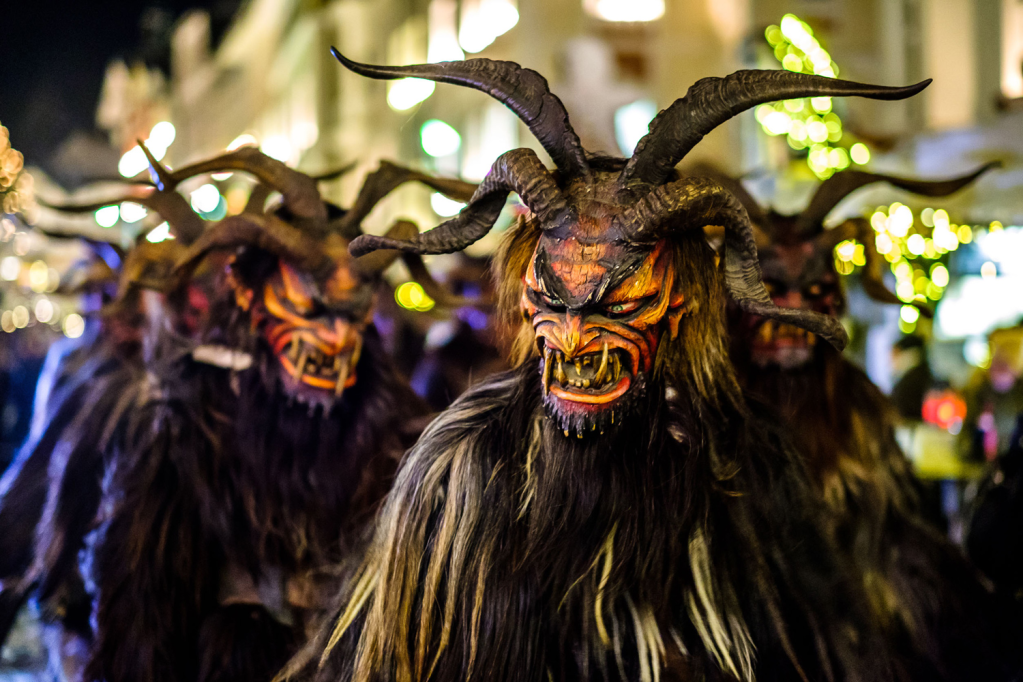
This is similar to the legend of Santa putting kids on the naughty list and giving them coal for being bad. During these annual parades people in the villages gather to watch people dress in the wooden masks, huge fur suits, cow bells for belts, and the big drums they play throughout the ¨run¨ in the streets.
The Krampus tale originated in the 17th century and is still active today; it came from pagan traditions in the Alpine regions. The people living in the mountains faced excruciating winters due to the amount of snowfall and possible avalanches so they decided to create terrifying stories of a half goat half human creature named Krampus, he lived in the snowy mountains and in winter would come out to take kids or eat them.
According to writer Karen Tina Harrison, “The Krampus thrill-fests are amongst Europe’s most spirited festivals along the lines of the running of the bulls in Spain, and Oktoberfest in Germany.¨
This started as a made up tale to trick kids into staying indoors during dangerously cold winters so they would not wander and possibly get hurt. Adults and older siblings used fear to make kids want to stay away from the snow since many children had wandered off and unfortunately were never found.
The original creature was described to be taller than a man, having a demonic but almost human face, long horns, a tail, and loud hooves that scraped the cobblestone. He also was covered in dark ratty fur and wore cow bells and carried a huge basket to fit children into.
People would also tease the kids and convince them they heard Krampus bells ringing which means he is coming, and they need to remain indoors or else they will disappear and never return.
This silly tale became tradition for pagan people and was a part of their culture. When christianity made its way to the alpine villages priests tried to erase the demonic tale of Krampus because it made it seem like the creature was more powerful than their God. The people living in the alpine region rejected their ask and would not let their culture be taken for a new religion.
Young men started holding Krampus runs at night on December 5th, and would dress up as Krampus in huge fur suits, wooden horned masks, with loud cow bells. They would wander the streets at night chasing everyone as it was the only day of the year it was acceptable to dress up and scare or terrorize people of the village. They would not physically harm strangers but would chase them causing many to stay indoors on Krampus night to avoid children being traumatized.
At one point someone dressed as Saint Nicholas would also accompany those dressed up as Krampus to show children St. Nicholas had power over Krampus and if they were good all year he would reward them, if they were bad he would tell Krampus to go up to them and scare them so much that they would now behave. Parents also participated and would tell Krampus the truth if their kids were being bad.
These past nights of terror seemed to be too much for children so now it has changed to more of a fun parade where people willingly watch dozens or more dressed as Krampus marching in town.
Christian Oberlerchner a run participator says ¨ For us Krampus is a tradition, we want to celebrate it and pass it down to the youngsters, there are too many customs like this being forgotten.¨ They play music and loud drums while singing to celebrate or honor Krampus as they do not want to forget about the iconic tale that was tried many times to be erased from their people.
Krampus was used as a symbol of the harsh winter the alpine people faced, and they still celebrate him annually in December. Instead of a violent chase at night people watch as locals play drums and follow around people watching to frighten them, but not harm or chase them around in a terrifying way.
 beniciapaw.com