By Laine Penney
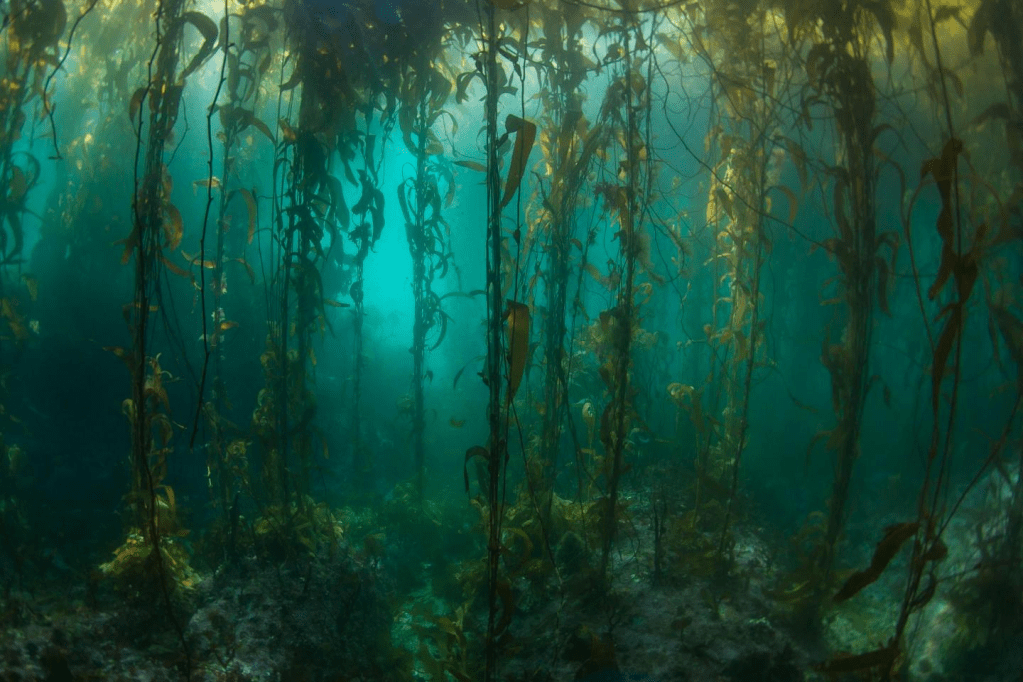
The California coastline is home to miles upon miles of kelp forests that soar to 100 feet high. These forests provide shelter and food to thousands of marine species such as jellyfish, salmon and crabs, making California waters full of biodiversity. But recently, studies have shown that starting in 2014, the amount of kelp covering the coastline has fallen by more than 95%.
Researchers have scoured to discover why this has happened. They have concluded that there are two main factors: marine heatwaves, and sea urchins.
Underwater heatwaves deplete nutrients from kelp and make it harder to grow, as they have a preference for cold water. This struggle is further exacerbated by climate change, as the overall ocean temperatures are increasing over the years. “We know that these types of events – these warm water events and stronger El Niños – are going to become more common and frequent with climate change,” Meredith McPherson from UC Santa Cruz said in an interview conducted by Yale Climate Connections.
Protective measures casted towards these areas seem to have positive effects, however. A study released in August by researchers from UCLA shows that while marine protected areas cannot counteract heatwaves and climate change, these areas recover quicker than non-protected areas. “Marine protected areas typically cannot directly mitigate ocean warming or marine heat waves. However, this study shows that they can still enhance the resilience of kelp forests to climate change by reducing other stressors,” said co-author Kyle Cavanaugh. It is possible that more protective measures will be added to the coastline in the future.
The main action that is being taken as of now is the removal of sea urchins from the kelp forests. Sea urchins eat through the base of the kelp, letting them float away and die, as well as eat any spores that the kelp produces so they can’t grow. The Bay Foundation has actively fought against this for over a decade around the southern California coast, with more than 77 acres of kelp forest being restored to date. 5.8 million purple urchins have been smashed and removed from the kelp forests as of September, allowing the kelp forests to regenerate and thrive.
People all across California are coming together to study the kelp forests and find solutions that help restore the habitats of the many marine species that make up California’s waters. Without kelp, many animals will die off and the biodiversity will fade away. Actions that you could take to support this cause is donating to non-profit ocean restoration organizations such as The Bay Foundation. Additionally, reducing littering and preventing overfishing will help the kelp forests recover and grow.
 beniciapaw.com