By Laine Penney
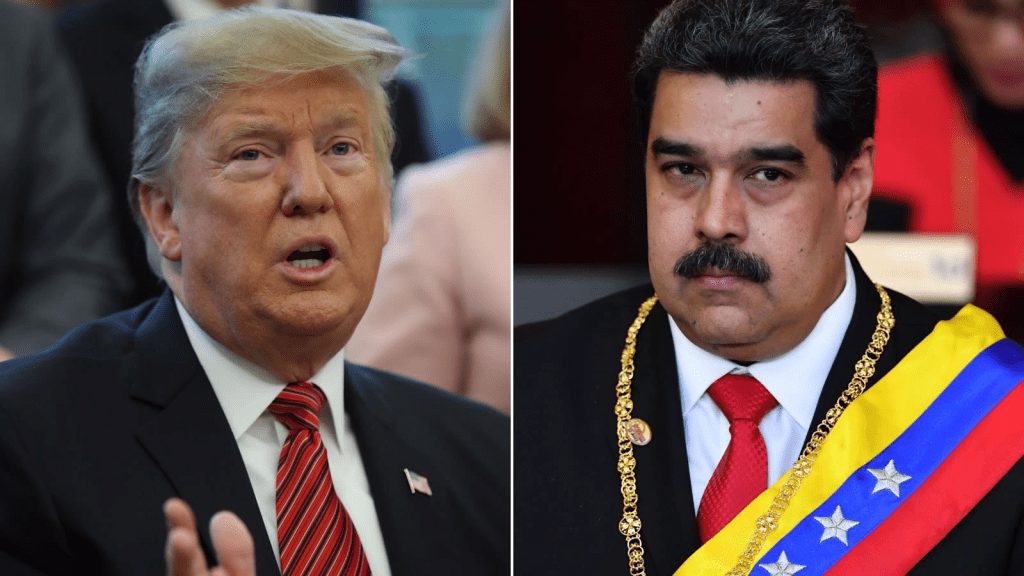
On January 3, the United States launched an attack on Venezuela’s capital and captured their leader, Nicolás Maduro and his wife, Cilia Flore. They were sent to New York and charged on narco-terrorism and drug trafficking. This dramatic and widely regarded illegal act shocked many people around the world, as President Trump soon claimed that the U.S. would now run Venezuela.
It has been more than a month since this event, and things are looking tense across the waters. Trump has launched more military strikes on several alleged drug trafficking boats in the Eastern Pacific Ocean and Caribbean Sea. This has brought the total number of people killed ever since the start of the U.S. campaign to at least 151.
U.S. military forces have also seized several oil tankers, as part of the Trump administration’s plan to control Venezuela’s oil. Many tankers with millions of barrels of oil left the Venezuelan coast during the invasion back in January, despite Trump ordering a quarantine of sanctioned tankers. As a result, the U.S. has been hunting them down.
The Trump administration has also had conflicts with other countries around the Caribbean as a result of the campaign. The administration initiated an oil ban on Cuba as part of initiating their control, to which they had to ease it because of the energy crisis that had spawned as a result. Because of the fuel shortages and island-wide blackouts, Secretary of State Marco Rubio demanded that Cuba needed to change, signaling potential initiatives may be taken by the administration.
Rubio has also taken other actions to assert the Trump administration’s interest in the Western Hemisphere during this campaign, visiting St. Kitts and Nevis to promote foreign policy and to discuss the enhancement of prosperity and stability in the hemisphere among Caribbean leaders. “During his visit, the Secretary will reaffirm the United States’ commitment to working with CARICOM member states to enhance stability and prosperity in our hemisphere,” the State Department said before his visit.
Meanwhile, the U.S. has built up an overwhelming military force in the Middle East, threatening Iran due to conflicting foreign policy.
In Venezuela, Foreign Minister Yvan Gil has been demanding the immediate release of President Maduro, describing the abduction as a “political operation disguised as a legal debate,” while the country recovers under the leadership of interim President Delcy Rodriguez. The Trump administration has prohibited Venezuela from paying for Maduro’s representation in court, according to his lawyer. Pleading not guilty, Maduro and his wife are currently being held in a New York detention center, awaiting a trial in March.
 beniciapaw.com