By Corey Bennett
There is widespread dense fog in the forecast for the Bay Area and the Central Valley this winter. Though the fog will slowly burn off and disappear throughout the day, there is still a hazardous driving warning due to the visibility being less than a tenth of a mile.
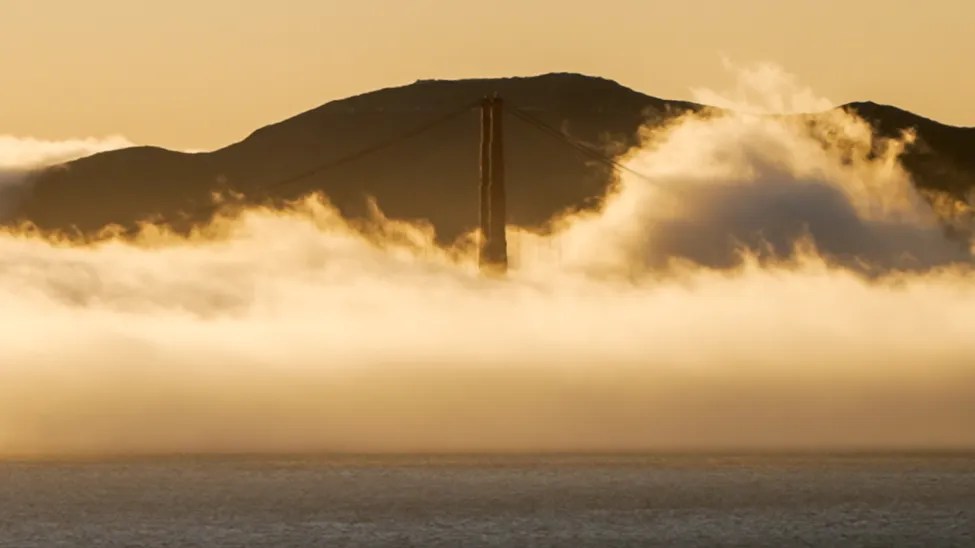
Though San Francisco is known for its summertime fog, which is blown in from the ocean, there is a second fog season around the Bay Area and Central Valley in the winter that is even worse than the summertime fog. This dangerous winter fog is known commonly as tule fog.
This tule fog, unlike regular summertime fog, is formed from a different process, radiation. During the late fall and winter nights, there happens to be a lot of time for heat to escape into space, causing the air to cool. While the temperature drops, it approaches the dew point. The dew point is the temperature at which the air cannot hold any more water vapor. When the temperature begins to match the dew point, it causes saturation, which makes it so that the water vapor condenses and is then visible as fog droplets.
The fog can be dangerous because it can extend across large distances and cause visibility to be nearly impossible.
Because of the cold weather, winds are unable to move the fog, and the pressure from the warm air above the mountaintops presses down onto the colder air down below, causing it to be a dense, unmovable fog that can persist all day throughout the winter months.
However, due to climate change, we are seeing a large decrease in fog in the Bay Area.
The fog has already decreased by 33 percent over 60 years in the California coastal area. Climate change can make it so that we see fewer and fewer foggy days in California. Though that information could be good news to some people, the fog is way more important than most people think. The main way that the fog is helpful is how we grow our food.
Half a mile from the ocean in Watsonville, Rod Koda, owner of Shinta Kawahara Company, thrives on fog to help grow strawberries on his 15 acres of land. “Here along the coast with the fog, the temperatures are cooler, so the berries ripen slower and get more sugar content,” he mentioned in a statement with KQED.
Due to California’s heat, most areas where strawberries are grown, like Salinas and Gilroy, ripen faster, meaning that with just one heat wave, the strawberries have to be picked immediately. Though thanks to the fog Koda doesn’t have to worry about that and has more flexibility.
On top of that, fog also helps with simple tasks, like laying down the plastic in preparation for planting strawberries.
“It comes out nice because the dirt is a little softer,” Koda says.
These strawberries rely heavily on moisture from the fog. Though Koda hasn’t seen any major changes in the fog patterns over the years as he has been farming, he says every year feels different.
But if there was no fog in the future, farmers, like Koda, would have to compensate for the water loss, and growing things would require more water. When it comes to harvesting, a lot of farmers won’t have the flexibility that they have now, and for us, the consumers, that would not be good. Things like strawberries would be less tasty and even more expensive.
Not only is fog good for farming, but to some extent, it even helps protect us from wildfires. The moisture from the fog acts as a fire retardant, and without it, many more areas in California would be more susceptible to wildfires.
In conclusion, without fog, life in the Bay Area would change drastically.

