By Jacoby Lambert
Space is vast and infinite we know a lot about it but at the same time we know nothing. Why should we explore space? That is a good question we need to explore space because space pushes the boundaries of human knowledge. We can discover new resources and ensure the long term survival of our species. By looking outward we can develop life saving technologies, learn how to protect earth from asteroid impacts and answer the ultimate question: are we alone?
What is space? It is a vast continuous expanse that exists beyond earth. It is often called the vacuum because it is mostly empty containing almost no air, matter or pressure. Space officially begins at the karman line, an imaginary boundary located 62 miles above the earth’s surface.
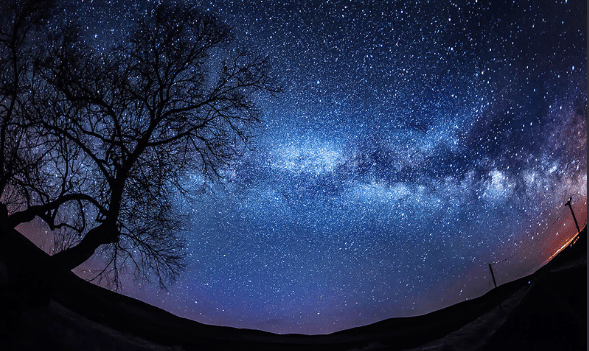
Space is not all empty though there are stares that are massive glowing balls of hot gas like our sun. There are planets and moons, rocky or gaseous bodies that orbit stars.There are an uncountable amount of asteroids and comets left over rocky and icy debris from the early solar systems. There are galaxies which are cosmic neighborhoods like our milky way galaxy containing billions of stars, gas and dust held together by gravity.
We could even find other life scientists believe the probability of alien life existing is overwhelmingly likely, because there are trillions of planets in the universe, the mathematical odds that earth is the only one with life is very small. Most alien life is likely microscopic like bacteria or single celled organisms. Although there could be intelligent life out there somewhere.
The planet most likely to have life is Mars because we found proof that liquid water flowed on its surface in the past. However scientists are even more excited about the icy moons that orbit around mars like Europa that has an ocean under its thick ice crust there could be life swimming around under the ice.
One of the greatest mysteries of space is the fast radio bursts. These are intense bright flashes of radio energy that last only a fraction of a millisecond but blast as much energy as our sun produces in an entire day. They travel billions of light years away and scientists still don’t know what they are. They could be dead stars colliding with each other or advanced alien technology. Now there is something in space I have not talked about and that is the black hole. It is a place where gravity pulls so much that not even light can escape it. This forms when a massive star dies and collapses in on itself. Black holes do not look like what they look like in the movies; they are completely invisible.
Now you might be asking yourself why all this matters because exploring space is not just about protecting earth from asteroid impacts or finding cool new planets and maybe even alien life it is about how when we come thought as humans put our differences behind we can accomplish cool stuff that we never thought of before. In the early 1900s people thought it was impossible to go to space but just 61 years later we entered space and 8 years after that we landed on the moon.
If we spent less money on wars and more on space exploration we could already be on mars and maybe even leaving our solar system.
Exploring space also gives us advanced medicine. Testing proteins and cells in zero gravity helps scientists design better cancer drugs and study bone loss treatments. We can track climate change, space satellites monitor global temperatures melting glaciers and deforestation giving us data to combat climate change. Space exploration also gave us inventions like memory foam, wireless headphones and water purification systems that we still use globally today. There is more tech in your iphone then in the Apollo 11 mission that took humans on the moon and back safely. With the technology we have today we should be sending a new ship or unmanned probe in space every week to expand our knowledge of our world and universe because in the big picture we are so small compared to the universe we need to become a multiplant species if we want to live another 300,000 years.

