By Avery Roy
One of the many reasons why the rearming of Europe is happening can be seen on the NATO (North Atlantic treaty organization) website, citing the main concern as the scale of the Russian invasion into Ukraine, which is still active. It also cites that they wish to replenish the stockpiles given to Ukraine. Other sources, like Georgetown University, say that the pressure of the U.S. on the Alliance, and the potential for the lack of U.S. involvement if Article 5 is triggered (a section of the NATO treaty that states that an attack on one is an attack on all) is also a concern. These two major reasons have convinced the leaders of NATO that rearmament is important so that they are reassured that when the worst comes to worst, they can defend themselves.
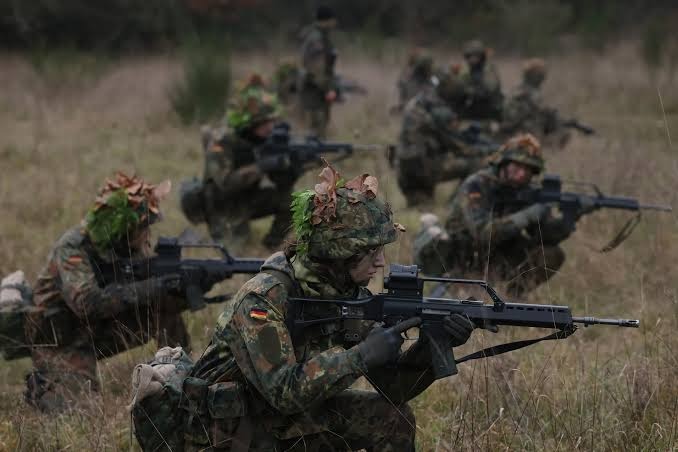
Countries that are rearming would first include Germany, which is projected to have the largest land army in Europe by 2039, according to Defense News. Other nations, like France, are investing heavily in increasing the amount of munitions they have, along with investing into drone technology for future warfare scenarios. Most of this military development comes from countries within the EU and NATO. This wide span of collaborating countries allows for the rearming to be more efficient in how many resources the countries can use to help improve each other’s militaries.
The mass rearming of Europe Across NATO and the EU has an outstanding cost of $840 billion to $1.2 trillion. This massive price comes from the new mandate within NATO to have every member nation spend 3.5% of their own GDP on defense spending. This comes after abandoning the old 2.3% moto due to unpredictable American attitude and the ongoing war within Ukraine. These factors have caused this mass rearmament across the continent.
Some of the effects of this rearming is a stronger NATO that can hold its own against Russia, or any other external force, while also to some degree gain more equality within the Alliance from U.S influence dominating it. But this bonus also comes with some unforeseen problems like the mass militarization of countries and the deterioration of relations with countries sympathetic to Russia, mainly Belarus. This also can take massive tolls on the economies of European countries that for decades have been reliant on U.S. security promises, and for years have not invested heavily into warfare technologies.

