By Avery Roy
Somali pirates have been a relatively non-threat to trading over the course of the last 3 years, with the last boarding happening to the Bulk carrier MV Ruen in December of 2023. With this, the world would get a period of around 3 years of rest until a new conflict would spring up in the middle east again, this being the war in Iran during 2026.
Early in 2026, the amount of hijackings by Somali pirates were around 6 according to the international maritime organization, and around 100 people ransomed (the crew), earning around $400,000,000. These recent spikes have been attributed to the War in Iran, causing instability and misgoverning of the region.
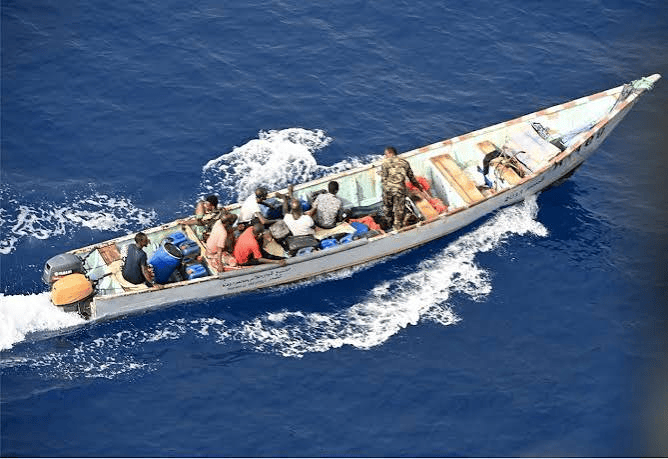
Unlike before, these groups are more advanced than normal, using higher tech gear and equipment to more effectively take over ships cruising off the coast of Somalia. They also go abnormally further to do the same off the coasts of yemen and across the indian ocean. The reason for these changes in tactics and weaponry is due to an external group supporting these hijackings. This group is alleged to be the Houthi rebel group within Yemen al-shabaab and Al-Qaeda. The other reasons for this uptick in piracy is due to how overwhelmed security forces are, with them having to deal with the Houthis, ISIS, and illegal fishing. So with these monstrous tasks attacking and halting Somalian privacy is extremely difficult.
With these increases of attacks, sadly, overly cautious ships have fired upon suspected fishermen. This was done by a Turkish ship carrying weapons. With Turkey claiming that the fisherman boat only harbored pirates, the city of Puntland claims only one out of the 4 that died had connections to piracy. Luckily, these current surges are nowhere near the highs they were in 2011, with around 1,000 record piracy attacks, 239 ships hijacked/attempted hijackings, and costing the world at its peak around $18 billion annually.
Thanks to the efforts of nations working together, notably NATO, China, and Russia resulted in around 1,400 pirates being incarcerated in 21 countries. But even though these pirates will never again reach that same scale, something has fundamentally changed for the modern pirate. Instead of rickety motor boats, untrained fishermen, poor equipment, and international pressure, the new Somali pirates are getting military grade training from extremist militias across the region. Along with better equipment, they are learning from past mistakes by using more modern technology like GPS tracking to choose weaker targets while being able to hide under the cover of other extremist groups for protection. Over the next decade, this war in Iran that helped promote these fundamental changes will change how many hijackings will happen every year and how future counter piracy efforts will work.

