By Laine Penney
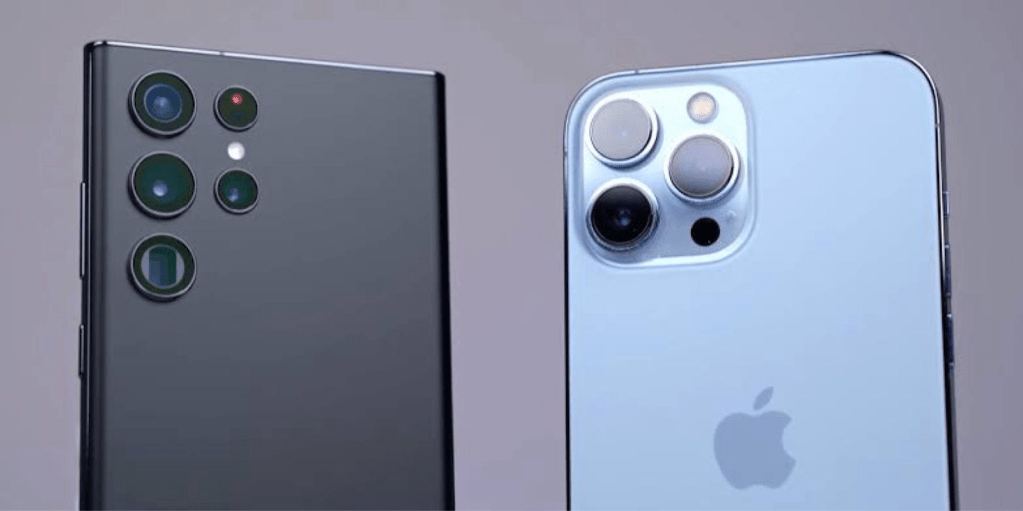
When you’re bored in class and wishing you had your phone on you, what type of phones do you see on the phone rack? Do you see rounded, Apple marked phones, or sleek, sharp phones with cameras in a column?
Samsung and Apple are both well known, high-grossing competitors in the smart device market, raking in millions of dollars for their high-tech phones. The innovation and growth of this market has left people debating for years which company you should be relying on for your next phone. Here’s where Apple and Samsung stand now as of this year.
The most recent iPhone as of early 2026 is the iPhone 17. Dropping back in September, the iPhone 17 offers hardware upgrades such as the A19 chip that improves battery life, a 6.3 inch Super Retina XDR display, and a Ceramic Shield 2 to protect from scratches.
In terms of operation and software, iOS 26 on the device provides the new Apple Intelligence with more features such as Live Translation and Visual Intelligence. Their 48MP Dual Fusion camera system ensures higher resolution photos. Overall, Apple focuses on smooth operation and ease of access.
The most recent Samsung release is the Samsung Galaxy S26. They offer a 50 MP camera with overall improved NPU, GPU and CPU performance compared to their previous entry.
Inside the device is thermal interface material to dissipate heat, as well as a battery allowing for more hours of video playback. Their camera allows for enhanced night photos, steady recordings and 30x digital zoom.
Samsung clearly intends for high demand operation of their devices, which is why their hardware is so advanced. Their software comes hand in hand; Galaxy AI is heavily integrated.
The Samsung Galaxy S26 integrates voice activated photo editing, an AI assistant that helps provide shortcuts from the context on your screen, and a personal device assistant named Bixby. It’s a little unsettling, but it’s what happens when you skip over the terms of service and press agree anyway.
Both companies offer similar upgrades and a higher tech, pro version of their device. But how do sales compare the two models? The iPhone 17 outsold the iPhone 16 by 14% during the first 10 days of availability in both the U.S. and China.
Mengmeng Zhang, a senior analyst at Counterpoint, commented, “A better chip, improved display, higher base storage, selfie camera upgrade – all for the same price as last year’s iPhone 16. Buying this device is a no brainer, especially when you throw channel discounts and coupons into the mix. Simply put, it provides extremely good value-for-money, and Chinese consumers are rewarding Apple for that.”
The Samsung Galaxy S26 came out more recently in March, and broke pre-order records in South Korea in the span of a week, with 1.35 million units being sold. More than 70% of those orders were for the S26 Ultra version.
With the new Snapdragon 8 Elite Gen 5 processor, Android Central writer Nickolas Diaz notes, “The Ultra seeing the largest portion is no surprise; that Privacy Display has likely caught a lot of eyes, and people are just interested.” Samsung allegedly plans to go full send on production of the S26 Ultra model.
The iPhone 17 price starts at a base price of $799.00 to $1,029.00, while the Samsung Galaxy S26 starts at $899.99 to $1,299.99. Both devices sport different features that make them fierce competitors for the space in your pocket, filling in the spot your money took. Which one would you choose?

