By Robin Bruno
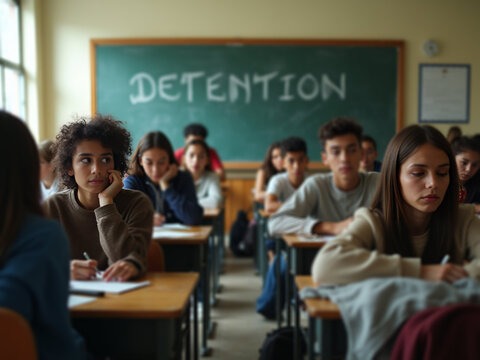
Schools have been putting kids in detention for more than a century as a punishment for disruption, missing homework, or tardiness.
It restricts the students freedom, forcing them to complete their missing assignments on their own time, and increasing their punctual abilities. But is it really that effective?
Nathan Porter, an author for the Population Reference Bureau published an article about a study that was conducted to prove how discipline threatens youth mental health.
In the article researchers found a, “64% increase in odds for depression symptoms and a 49% increase in odds for anxiety symptoms among students who had experienced exclusionary discipline.”
Anxiety and depression in high schoolers, especially if gone untreated, is likely to lead to academic problems, substance abuse, and other long-term negative issues.
Keep in mind that this cannot be applied to every single student that is faced with a school detention, but the impacts of detention on mental health are mostly generalizable.
Besides, how could school detention get any worse? Well, as of Monday, March 9, 2026, Benicia High School has decided to move detentions from lunch to a before-school format which is held from 7:50 am to 8:20 am.
According to the BHS Administration, this change is designed to help students, “start their day on time and ensure our staff can provide the best possible support,” they also say that this will also, “better protect student social time during lunch while reinforcing a positive morning routine.”
While I do agree that it will be beneficial for students during lunch to socialize with friends, sleep is just as important for high school students. And for those students who can’t drive, they would need their parents to take more time out of their day and bring them to school earlier.
State Representative John Ray Clemmons tried to pass a bill that would have mandated later start times for school to help improve student participation, he argued that it would be beneficial, “because of the way adolescents’ bodies release melatonin, waking a teen at 7 am is akin to waking one of us at 4 am.”
With the new detention system in place, a new question and concern arises. Will this negatively impact students and their learning in the classroom? And how are they planning on enforcing attendance?

